Showing posts with label Odonata. Show all posts
Showing posts with label Odonata. Show all posts
Saturday, April 18, 2015

Wednesday, February 4, 2015
Portrait (Damselflies)
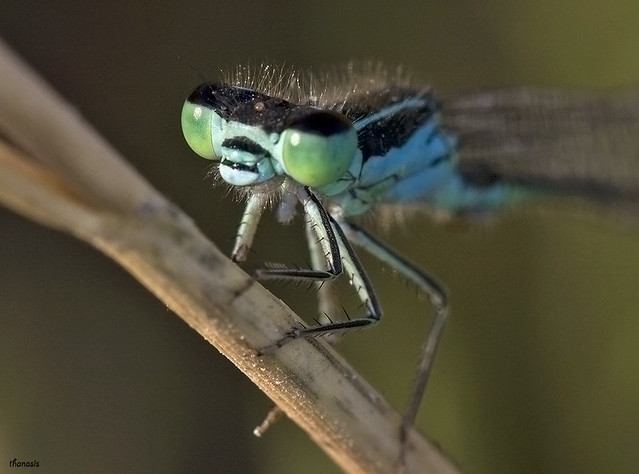
The portrait of a male Blue-tailed Damselfly. This damselfly is about 3 cm long, so for this shot I used for the first time all the extension tubes combined, 7mm, 21mm and 31mm. Notice the reddish dot between the compound eyes. This is the ocelli, it is an extra eye, only this eye is single and not compound!
Thursday, January 22, 2015

Wednesday, January 21, 2015
Damselflies - Cretan Bluet
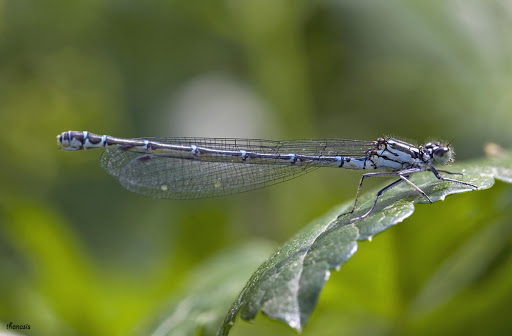
The first (and only up to now) Cretan Bluet that I have seen. Cretan Bluet is an endemic species in the island of Crete, Greece. According to the "Field Guide to the Dragonflies of Britain and Europe" of Dijkstra & Lewington, the flight season fot this species starts from mid May, but I made this observation on March 18 of 2013!
Wednesday, January 14, 2015

Tuesday, January 6, 2015
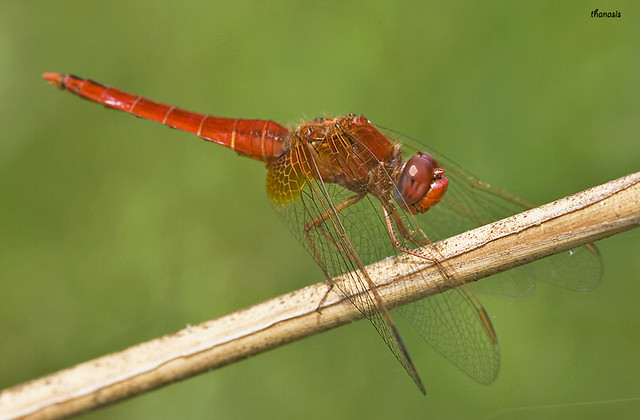
Long Lives the Emperor - Anax imperator

The Emperor Dragonfly (Anax imperator), one of the most fascinating dragonflies! I've been watching these gyus flying around for over two year now, and finally I saw one standing! It gave me the time to take only very few shots before flying again. Amazing animal, very big dragonfly.
Saturday, January 3, 2015
Damselflies - Goblet-Marked Damselfly
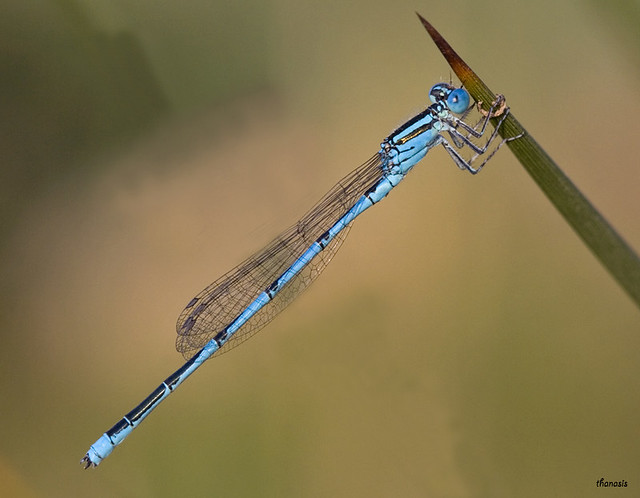
Photographing in the field and then deep search into the books to identify the species! This is another new species for me. It's a male Goblet-Marked Damselfly (Erythromma lindenii).
Saturday, December 13, 2014
ID - Red veined Darter - Immature male VS female
A common problem when trying to identify odonata species (both Damselflies & Dragonflies) is that immature males of a species often look quite similar to mature females, which can become very misleading. The easiest way for a fast and accurate identification is the observation of reproductive structures, such as the male secondary genitalia and appendages or the female ovipositor or the vulvar scale. However, in many cases this becomes difficult due to their small size or a not so suitable angle between the subject and the observed. In this cases coloration might become a better index for the identification. Here I will try to point out some differences between immature male and mature female red veined darters (Sympetrum fonscolombii).
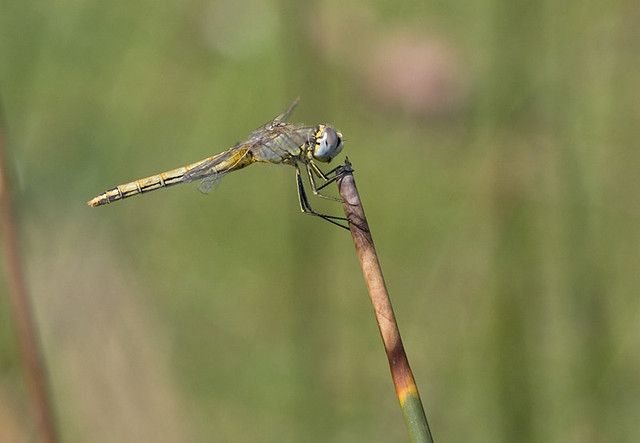
This is a mature female individual. The abdomen's coloration, with the two black stripes running the ventral part of the abdomen, is characteristic for the females.
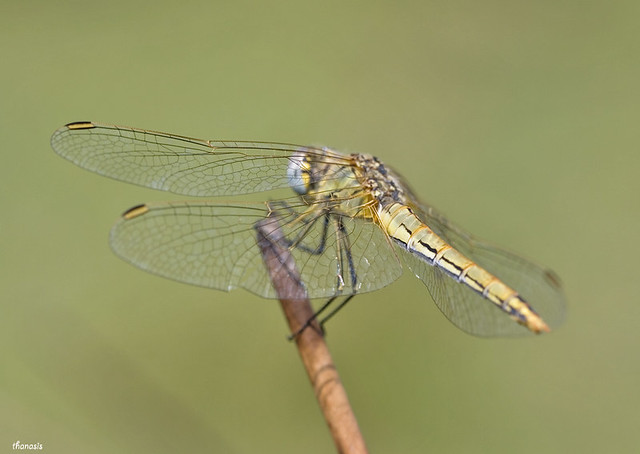
A better view of the female abdomen.
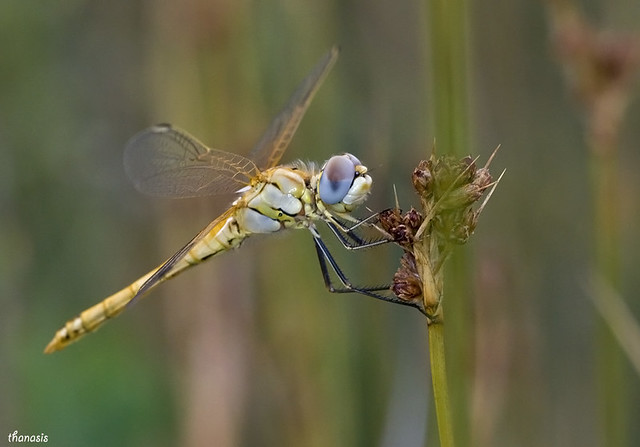
Now this is how an immature male looks like. The general similarity with the female is more than obvious, however the specific pattern in the abdomen is missing. Moreover, if you give a better look under the base of the abdomen (S2) you will notice a slight "swelling" which is a male's reproductive structure enabling him to transfer sperm to the female, the so called secondary genitalia.
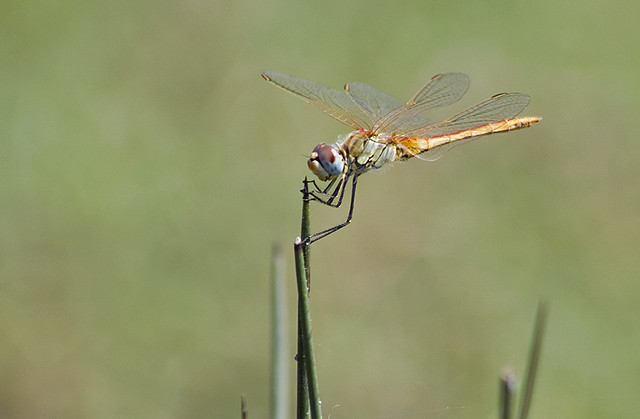
Eventually, the immature male will start to become mature and change his colour to red. This is how this procedures begins. As you can see the dorsal of the abdomen has already turned red, and the rest of the body will follow.
Thursday, December 11, 2014
Damselflies - Migrant Spreadwing
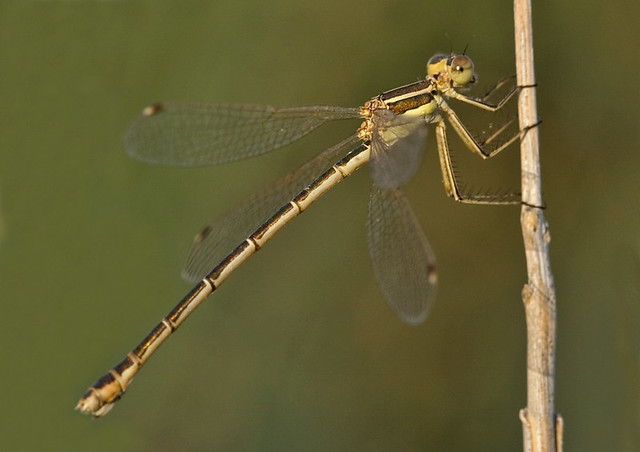
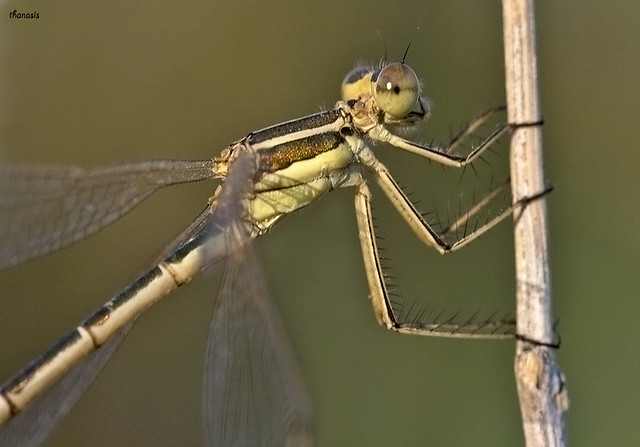
Some days out in the field can be very poor. This is what happened to me on July 22, when I went out to photograph Dragon- and Damselflies and for the first hour I would only encounter the common and over-photographed Common Blue-tails. But then my luck changed and I saw one individual of a different speceis...which was this Migrant Spreadwing, (Lestes barbarus) a new species for me! Photographic from a distance at the beggining, and then getting closer step by step.
Tuesday, December 9, 2014
A Dragon's breakfast
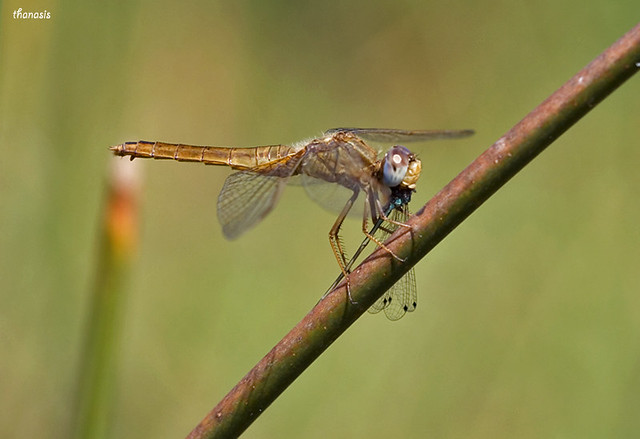
Life can be hard, especially if you are small. This is what happer to this small damslefly (Blue-tailed damselfly - Ischnura elegans) which is being eaten by its larger distant "cousin", a Scarlet Dragonlfy (Crocothemis erythraea). Odonata are indeed ferocious predators!
Monday, December 1, 2014
Still Alive
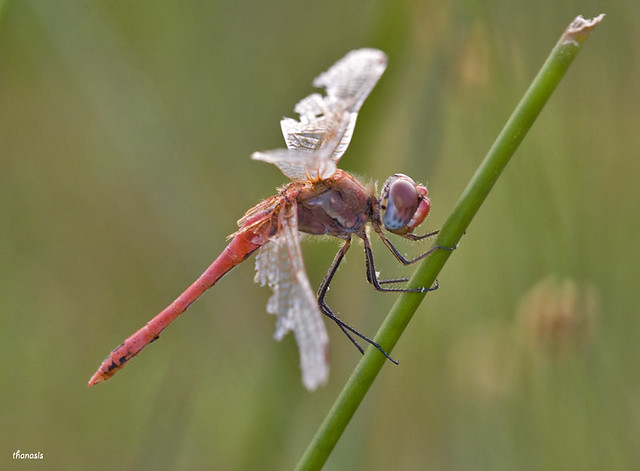
Early in a summer morning, with much dew, this elder male Red-Veined Darter (Sympetrum fonscolombii) was trying to stay alive for one more day. Spreading the wings in order to gain energy from the sun, is the usual way to achieve this.
Wednesday, September 11, 2013


Tuesday, July 16, 2013

Thursday, July 11, 2013

Sunday, November 18, 2012

Sunday, October 28, 2012


Subscribe to:
Posts (Atom)
LinkWithin
